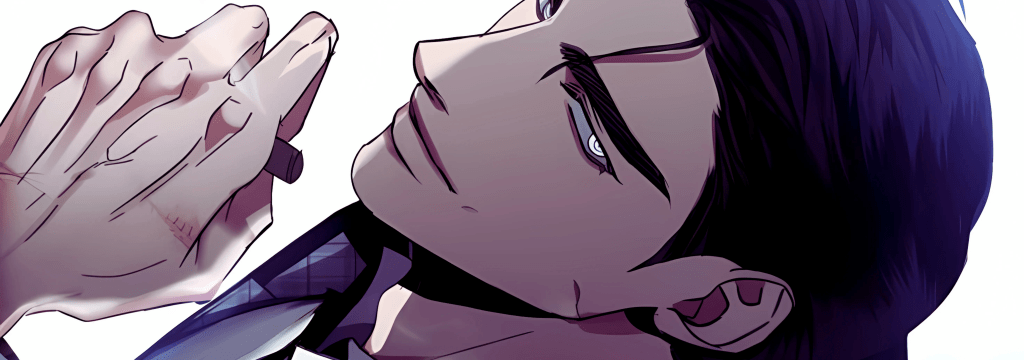
“It’s not Stockholm Syndrome if I’m into it, right?“
♡ Yandere! Superpowers AU x Fem. Reader. feat. Yandere! DILF! CEO
♡ Word Count. 6,314
Money meant nothing to you. That was the secret.
People would assume you were just lazy, apathetic, another spoiled rich brat refusing to make use of her advantages. A shut-in, a gamer, a ghost walking through life. They didn’t see the way your hands twitched at the sight of a ledger, how your eyes darkened when a transaction alert beeped on your phone. To them, you were a disgrace to the family empire. The family empire that saved lives, fed orphans, and built cities. How could you, the prodigy, the girl born with a brain like a quantum processor, not care about the legacy you were supposed to uphold?
Because money, to you, wasn’t value. It was a graveyard.
You remembered every dollar like a scar.
The first time he saw you, you were four years old.
He hadn’t meant to notice you. At that age, children were noisy things with sticky fingers and poorly concealed tantrums. Brats in designer shoes. He loathed events like this—another penthouse gala masked as a birthday party, another circle of clapping investors pretending to enjoy fruit champagne and watching the heirs perform their party tricks.
But then you walked in.
No. You entered. Alone. Unescorted. No one introduced you. No one needed to.
In a ballroom gilded in excess, a child in a monochrome black suit with a crisp tie walked straight to the grand chessboard without saying a word. Your hair was neat. Your back perfectly straight. You weren’t smiling. Children were supposed to smile.
You didn’t look human.
He noticed the way the room paused when you sat down, expression blank. The murmurs began again when you beat three adults in a row. Each move calculated in less than ten seconds. Then the piano—he remembered that too. Someone called for entertainment. You climbed onto the stool and played Revolutionary Etude as if you were a ghost channeling Chopin’s rage.
Not a note wrong.
No one clapped.
Your siblings glared at you like you’d ruined something sacred. Your mother didn’t smile. She touched your shoulder gently. Too gently. The kind of gesture meant to be seen, not felt.
That was when he began watching.
From behind the rim of his whiskey glass, he observed the subtle things—the way you kept your arms tucked in, always standing just a little apart from everyone else. You never initiated contact. You never met anyone’s gaze. And yet, you obeyed every command. Always with a bowed head. Always silent. You didn’t even cry when your father called you to stand before a boardroom of suited adults to present the quarterly investment projections.
He watched a child explain compound interest with a chalk marker.
“She’s a gift,” someone whispered.
“She’s terrifying,” someone else said.
But he said nothing.
He didn’t approach you that night. He didn’t need to. He already knew what you were.
You were a business machine dressed in skin.
The other children ran around, throwing cake and balloons. You sat by the corner after your part was done, alone, legs tucked to your chest, ignoring the slice of cake someone placed in front of you. You didn’t even eat it. You just stared at the floor like it might open up and swallow you whole.
Your family was kind.
To everyone else.
They smiled. They helped the janitors clean up. They held charity auctions and built orphanages in their spare time. They were generous, deeply respected people. But with you? They demanded. Not cruelly. Not loudly. But with expectations that could bury mountains.
You were the diamond they cut and cut and cut.
He learned more later.
That you never cried as a baby. That you were born too quiet. That you didn’t speak a word until you were nearly five—and even then, it was a business pitch. That your room didn’t have toys, only whiteboards. That the nanny assigned to you cried and quit within two months. That your reward for straight A’s was silence, and your punishment for failure was even quieter.
You were born brilliant.
But brilliance has a cost.
He remembered the first and only time you broke formation that night.
You had been waiting by the large bay window when your father passed by with a laugh. Not at you. Never at you. He was telling a joke to a guest. And you—four years old—turned to look at him. Just a flicker of movement.
Your hand twitched.
He saw it. He was the only one who did.
The tiniest gesture. Reaching out.
And then withdrawing before anyone noticed.
Not even your father.
You didn’t try again. You just returned to your perfect posture, blank expression. Like you hadn’t moved at all.
He never forgot that.
Because that was when he realized something.
You were not just brilliant.
You were starving.
Not for food. Not for toys. Not for praise. But for something much more brutal.
To be seen. To be held. To be loved for something not transactional.
But love, like money, always came with strings. And in your world, strings became chains.
He didn’t speak to you that night.
He didn’t introduce himself.
But that was the night he made a decision.
When the day came—and he knew it would come—he would be the one to take you away.
Not because he pitied you.
But because in you, he saw something terrifyingly rare.
A lord pretending to be a pawn.
He would watch. He would wait.
And when you broke?
He’d be there to put the pieces back together in his image.
After all—what was a little girl’s soul to a man who already owned the world?
And you?
You wouldn’t even resist.
You never had.
You were just waiting for someone to finally see you.
He would.
He already did.
⋅───⊱༺ ♰ ༻⊰───⋅
The second time he saw you, you were eight.
He wasn’t supposed to be at that conference. He never cared for these yearly galas and global summits where the old money rubbed shoulders with the newer devils. He only went because the venue was under his portfolio. And because—well. He had a suspicion you’d be there.
You hadn’t left his mind since the party.
That odd little four-year-old machine, with your piano hands and dead eyes.
But what he found this time was something different.
You were taller, for one. Not by much, still small, still a child—but you’d grown. Still pale as paper, still wearing that same sleek, conservative monochrome suit, still eyes like oil slicks in a bucket of water.
But there was a new feature on your face.
A smile.
It was the smile that caught his attention again. Not because it was lovely—though, sure, you were. You’d been made to be lovely, hadn’t you? In that eerily perfect kind of way the children of billionaires always were: engineered, trained, sculpted.
No, what drew him in was that the smile was wrong.
Too sweet. Too exact. Like a wax mask melting just slightly under the heat of the ballroom chandelier. The same smile every time someone addressed you.
“You’ve grown so much,” they would say. “So beautiful.”
“You’ll be just like your mother someday.”
“She’s already halfway there,” someone else would laugh.
And then, from one of the aunts—always the aunts—it came again.
“You should smile more. You’re beautiful when you smile.”
He heard it clear as day, even from across the room.
You didn’t flinch. Not visibly.
But your eyes blanked out, just for a second.
The first flicker of life he’d seen in your expression since you walked in.
It was disgust.
Just a twitch of your brow, an infinitesimal downturn at the corner of your mouth that was promptly swallowed by the performance.
You hated it.
And yet—you obeyed.
The smile stayed. Polished. Hollow. Efficient.
You smiled like you were offering a receipt.
He moved to the edge of the room where he could see better but not be seen. This was your family’s domain. He wasn’t here to make deals. He was here to observe.
Because you fascinated him.
People applauded your manners. Your eloquence. How far you’d come. As if eight years old wasn’t still a baby. As if presenting your insights on offshore investment risk was normal for a child.
They didn’t see how every compliment was a command in disguise.
They didn’t hear the whispers close to your ear.
“Straighten your back.”
“Say thank you.”
“No, not like that—softer.”
“Don’t frown when someone compliments you. Be graceful.”
“You should smile more.”
He’d memorized your tells already. The way your fingers twitched when someone mentioned your mother. The way your shoulders locked when the women in the family drew close.
You weren’t comfortable with them. That was clear.
Despite being female yourself, there was a brittle tension to your posture when they cooed over your hair or adjusted your tie. When they gave those subtle reprimands wrapped in maternal concern.
It was different with the men. You were cold with them, too. But less tense. Less… claustrophobic.
He saw it. The slow realization that not only were you the youngest, but you were expected to be the best. They didn’t say it outright. That would be unseemly.
But they expected you to become your mother.
She was there, of course. Flawless. Dominant. The matriarch of the family. She moved through the room like gravity itself bowed to her presence. Her smile was all warmth, but her eyes had the sharpness of a vulture scanning for weakness. She was an empire in heels.
And when she turned to you, she turned into a storm.
Not cruel. Not visibly.
But the pressure in the air when she approached her daughter was unmistakable.
You stood straighter. Smiled harder. Spoke more clearly.
And she nodded with approval like you were a dog who’d finally learned to sit.
He imagined the way she trained you. Not with punishment, but with standards so high you had to kill parts of yourself just to reach them.
He had a theory: that your muteness hadn’t been a deficiency.
It was your protest.
You used to be unresponsive. Blank. A ghost child. And now? Now you spoke. You smiled. You socialized.
You’d been changed.
Shaped.
He hated it.
But he admired the craftsmanship. If cruelty could be called that.
You moved like a diplomat now. Knew how to pose for the camera. How to tilt your chin and widen your eyes just enough to seem innocent, curious, harmless.
It was almost convincing.
Except your eyes.
Your eyes never smiled.
He caught you looking at your own reflection once in the polished silver of a water tray. Just a second. A glance.
You looked away immediately. Not in vanity.
But in dislike.
And again, he thought: you’re starving.
You were a genius. That was no longer a question. You spoke five languages. Calculated numbers in your head faster than your instructors. You were everything they had wanted.
But now you were tired, too.
Not physically. No. Your health was immaculate. You were monitored, managed, handled.
But mentally? Emotionally?
You were eroding.
He could see the way your gaze faded the moment people turned their backs. Like your smile was a mask that exhausted you to keep on.
And still, you tried.
You tried so hard to be what they wanted.
Because what else could you do?
You were surrounded by people who loved you.
The kind of love that suffocates.
That says: We only want what’s best for you.
Which meant: Be better.
Which meant: Be her.
And he stood in the corner, drinking his neat whiskey and wondering what would happen if someone told you the truth.
That they didn’t want what was best for you.
They wanted what was best for them.
For the company. The legacy. The headlines. The mythos of the perfect family.
And you? You were their masterpiece.
He watched as you sat through another panel, nodding on cue, laughing once—just once—on a delay so slight it was probably rehearsed.
After the event, you stood alone on the veranda for exactly three minutes.
He watched from the shadows, out of sight.
You stood, back straight, hands at your sides.
And then, slowly, you slumped.
Shoulders dropping. Mouth twitching. Expression dead again.
He thought you might cry.
But you didn’t.
You just stood there. Quiet. Frozen. Waiting.
For what, he didn’t know.
Maybe for someone to come scold you.
Maybe for a few seconds of silence that weren’t calculated.
Maybe for the wind to blow hard enough to knock you over and give you an excuse to fall.
But no one came.
And when you re-entered the building, your smile had returned. Perfect. Empty.
He finished his drink.
You were a better actress than most adults he knew.
And they thought you were just growing up.
He knew better.
You were learning to die professionally.
And oh, how well you were learning.
⋅───⊱༺ ♰ ༻⊰───⋅
The third time he saw you, you were twelve.
It was at a private intelligence summit hosted offshore. No press. No publicity. Invite-only. Politicians, magnates, tech warlords. The real architects of the world. Your mother was there, of course—one of the guest speakers. You arrived a day later, escorted by two high-ranking aides and introduced as the “prodigy strategist in training.”
He didn’t expect you.
You’d grown again. A young girl on the cusp of adolescence now. Same black suit. Hair tied neatly. Always immaculate. But your presence was sharper this time—quieter, more dangerous.
Still mute, but no longer silent.
You whispered now. Only when spoken to. Voice low, careful. He caught it by accident once when you were giving your opinion on economic sanctions and defense strategies. A ghost of a voice, pure and soft, like silk brushing a blade. Your words always carried weight. Even the adults knew it.
He stayed in the shadows, mostly. Observing from afar, pretending not to care. But that was a lie. He cared. He cared too much. He’d been watching for years now. There was something about you that dug into the back of his skull, like a thorn he didn’t want to pull out.
And it wasn’t just your brilliance. Plenty of children were smart.
But none were like you.
You were inhumanly precise. Methodical. A machine in a doll’s body. And yet—and yet—there was always that glimmer in your eyes. That flicker of… sadness? No. Hunger. A desperate, parched thirst. For something no one around you seemed to notice.
Love.
It made sense. If you were truly empty, you wouldn’t bother playing the part so well. You wouldn’t glow when your mother looked at you and said, “Well done.” You wouldn’t light up, just for a second, when she smoothed your hair and called you “my pride.”
He saw it. That tragic, devastating transformation. How the puppet turned human for just a heartbeat under her hand.
God, you loved her.
And it made him sick.
Because he could see it for what it was: manipulation crafted with surgical precision. Logical. Consistent. Psychologically airtight.
Your mother was a damn genius.
And a monster.
She wasn’t cruel in any overt way. She never hit you. Never screamed. Never threatened.
No—she praised you. She rewarded. She conditioned.
She told you stories about her past, about how she’d lifted your family out of nothing. About the poverty. The hunger. The debt. She told you how no one believed in her, how she fought against every systemic block to claw her way to the top—for you. So you could have a better life.
“You don’t ever have to suffer like I did,” she said, stroking your cheek. “Isn’t that a good thing, sweetheart?”
And you believed her.
Because it was true.
She had given you everything.
But not for free.
No. She gave with one hand and took with the other.
Love, conditional on excellence. Affection, earned only through sacrifice.
And you were desperate to earn it. Still were. Even now, at twelve, a prodigy in a child’s body with more tactical knowledge than half the military advisors in the room—you looked at your mother like she hung the stars.
When she smiled at you, you glowed.
When she ignored you, you withered.
And no one else noticed.
But he did.
Because he couldn’t stop watching.
✦✧✦✧
That was when the rumors started.
Subtle. Quiet. Easy to miss unless you were looking.
A breach in the private system’s predictive algorithm. A sudden lockdown in the AI defense simulations, halted just before disaster. A political hostage scenario solved before the authorities even arrived.
The common thread?
You.
But no one said your name. They couldn’t.
Because the incidents were classified.
The kind of classified that didn’t show up in records even if you had top-level clearance. The kind that disappeared people who asked too many questions.
He asked anyway.
He had to know.
And the deeper he dug, the more confused—and fascinated—he became.
You weren’t just brilliant.
You were inhumanly capable.
Patterns emerged: You solved problems weeks before experts did. You noticed things no one else saw. You made predictions about threats, global movements, resource collapses—and they all came true.
At first, he thought maybe you were just lucky. A genius, yes, but still mortal.
But then there was the plane crash.
Unavoidable. Engine sabotage. One of the high council’s aircraft, supposed to go down in flames.
And it did crash. Except the crash was redirected. Not to the populated city, not to the core lab facilities. You, the child aboard the plane, instructed the pilots midair. You rerouted the fall. Everyone survived. Barely.
You should’ve died.
But you walked out with nothing but a scratch.
After that, he stopped pretending.
He ran simulations. Compared footage. Ran psychoanalysis on your patterns.
It didn’t add up.
You didn’t just solve problems. You bent them. Shaped them. Preempted them so flawlessly it looked like you already knew the outcome before it happened.
A Gift.
It had to be.
And not just any Gift.
Something terrifying. Unquantifiable.
A passive clairvoyance? No. Too reactive.
A probability manipulation? No—there was intentionality.
Then it hit him.
Your Gift was control.
Not just physical control. Not even time.
It was abstract. Narrative.
You had the power to twist the outcome of stories. The way authors control plot. Cause and effect. Consequence and reward. You could edit reality—but only under certain emotional conditions.
And you didn’t use it to escape.
Not once.
You could have walked away. Could’ve killed every handler, every relative, every corporate parasite. You could’ve disappeared into the world, changed your name, lived free.
But you didn’t.
Because you didn’t want power.
Not really.
You didn’t want the empire. Or the wealth. Or even the throne.
You just wanted someone to love you.
Truly. Unconditionally.
And no matter how strong your Gift, that was one thing you couldn’t force.
He understood, then. In the same cold, painful way surgeons understand disease.
You weren’t trapped physically. You were psychologically imprisoned.
Your mother was the warden.
And you loved her.
You loved her.
You shouldn’t have, but you did.
Because she smiled at you. Told you she was proud. Bought you things. Held your hand when you were sick. Told you bedtime stories about how hard she worked for you.
And so you told yourself, this must be love.
Even when it hurt.
Even when it turned your heart inside out.
You thought: If I do better, she’ll love me more.
You thought: She must love me. She says she does.
But he saw the truth.
Your mother needed you. That was all.
You were the next chapter of her legacy.
The weapon she’d built from her own blood and bone.
You didn’t belong to yourself.
And the worst part?
You knew.
He saw it, in that third meeting, in the quiet hour after the summit when you sat alone in the dim hallway.
Everyone had gone.
You were still, perfectly composed.
But your reflection in the mirror said everything.
Your mouth was smiling. But your eyes were dull.
Your hands gripped the chair like you wanted to scream but didn’t know how.
And when your mother entered the room and cupped your cheek and said, “You were brilliant tonight, my love,” you lit up.
Just like that.
Back to life.
A plant twisting toward sunlight, even if the light burned.
You glowed.
And he realized then, horrified:
You would never leave.
Even if you had the power to remake the world.
You wouldn’t walk away from the person who built your prison—because she gave you just enough love to keep you leashed.
You didn’t want freedom.
You wanted her to hold you again.
To tell you she was proud.
To say you were enough.
You just wanted someone to choose you—not for your power. Not for your mind. Not for your performance.
Just you.
Just you.
And it broke something in him.
Because he wanted to be that person.
And he knew he couldn’t.
Not yet.
But soon.
He just had to wait.
And keep watching.
Until you broke.
Until you wanted out.
Until you reached for someone—anyone—just to be held.
And when you did?
He’d be there.
Smiling.
Open arms.
Ready to love you the way you thought she did.
But this time, without conditions.
Because that’s what you wanted, wasn’t it?
Love without a leash.
And if he had to become your god to give it to you—
So be it.
⋅───⊱༺ ♰ ༻⊰───⋅
The fourth meeting was different.
Not just in location, or in title—but in intimacy. This time, you were assigned to him. Not as an equal, not yet, but as a kind of reluctant apprentice. A “mentorship,” your mother called it. “He’s one of the best. You could learn from him.”
He’d fought hard for that position.
Pretended it was just about business—about cultivating rising talent, securing political ties, shaping the next generation of leaders.
But it wasn’t.
It was about you.
And this time, he didn’t have to watch from afar.
You were sixteen now.
No longer a child, not quite an adult. You wore the same crisp black suit, tailored tighter now. Your hair was longer. Your posture immaculate. Your voice still a rare and precious thing—whispers here and there, a nod, a sharp glance when necessary. You didn’t speak unless required, and even then, it was like pulling wisdom from a well: deep, deliberate, infinite.
The first time you met him officially, you tilted your head slightly, studying him with those eerie, quiet eyes. Not cautious. Not fearful. Just… curious.
Then you smiled.
“Thank you for your guidance,” you said, with a warmth that should not have belonged to you. “I look forward to learning from you.”
He’d prepared himself for coldness. For calculation. But you disarmed him with that smile.
You were… nice.
Sickeningly so.
You treated him like a stranger you wanted to welcome in. Warm. Polite. Affectionate, even.
Just like your mother.
You were imitating her, he realized.
That way you tilted your head.
That half-laugh when he made a poor joke.
The touch to his arm when he handed you your itinerary.
You were mimicking her mannerisms perfectly. Not consciously, no—but they’d been drilled into your skin like tattoos. You didn’t even know you were doing it. That was the most tragic part.
You had no template for love but her.
And so you loved like her.
Not from the heart.
But from the rules.
If someone does this, respond like that.
If someone gives affection, mirror it.
If someone calls you brilliant, smile.
You were roleplaying connection.
You thought this was normal.
He didn’t say anything.
Not yet.
But it unsettled him. That artificial sweetness. That perfect mimicry. The way you said “thank you” as if you meant it—even though you clearly didn’t. You were too smart to actually respect him.
He could see it behind your eyes.
You were always calculating.
Even when you smiled.
Even when you laughed.
Even when you played along.
But he wasn’t like the others.
He didn’t want your good behavior.
He wanted the real you.
The one underneath.
So he started small.
Little things. Minor sabotage. He pushed back on your proposals during meetings, forced you to defend your ideas. He pointed out flaws in your strategy documents, real or imagined. At one point, he deleted an entire draft of a logistics simulation you’d spent three days refining just to watch your reaction.
You didn’t blink.
You simply retyped it from memory. Faster. Cleaner.
When he criticized your tone in a recorded briefing, you bowed your head slightly and thanked him for the feedback.
Always polite.
Always obedient.
It was infuriating.
He wanted to see you crack. Just once.
But you never did.
Until he discovered your pressure point:
Disruption.
Not aggression.
Not criticism.
But interference.
He began to tamper not with your work—but your schedule.
You worked like a machine. Nonstop, obsessive, disciplined. A twelve-hour work block, followed by study, analysis, and project design. Every hour accounted for. Every minute precise.
So he disrupted it.
The first time, it was subtle.
He cancelled your 3 p.m. diplomatic debrief and replaced it with a shipment of books.
Children’s books.
With bright covers and animal illustrations.
A note attached: “Your brain deserves dopamine too. Try it.”
You were… confused. Then embarrassed. Then polite again.
You brought the books back the next day and returned them with a bow.
“Thank you,” you said stiffly, “but I don’t require these.”
The next day, he sent you a gaming console.
Preloaded with ten titles.
A sticky note: “Bet you can’t beat me in any of them. Go on. Try.”
You returned it, red-faced.
You didn’t say you were angry. You never would.
But he saw it. In the way you walked. In the way your lips thinned, and your fingers flexed. In how you avoided looking at him that whole day.
Finally. A reaction.
So he pushed further.
Movies. Toys. Even a cake with your name on it. A dozen tiny, ridiculous gifts that served no purpose.
A fluffy blanket.
A bouquet of soft pink roses.
A stuffed black cat with a tie that matched your uniform.
You never kept them. But you never snapped, either.
You returned everything carefully.
You never scolded. Never questioned.
But every time you handed him another unwanted gift, you looked a little more tired. A little more confused.
It was working.
He was interfering.
Then, one day, he escalated.
He called your secretary and wiped your entire afternoon clear.
No explanation. No backup plan.
You arrived at your office and found nothing waiting for you.
No files. No memos. No meetings.
You stood there for a full ten seconds, motionless, as if the room itself had betrayed you.
Then, slowly, you turned—and found him lounging on your sofa.
“Hi,” he said. “You’re off today.”
You blinked. Once. Twice.
“I don’t take off days,” you said.
“You do now,” he replied cheerfully.
You didn’t move.
“I have reports to write—”
“I shredded them.”
Your mouth opened—then shut.
“You what?”
He smiled, teeth gleaming. “Digitally. Relax. They’re archived. But I’ve locked them behind a game. Beat the final boss, get your files back.”
You looked at him like he’d lost his mind.
And maybe he had.
But he didn’t care.
Because you were pissed off.
Finally.
Even if it wasn’t loud or violent. It was there.
In the rigid set of your shoulders.
The coldness creeping into your eyes.
You were angry not because of what he’d done—but because you couldn’t understand it.
It didn’t make sense.
Why would he sabotage your workflow?
Why would he ruin things just for fun?
Why would he try to make you play?
He laughed when you stormed out of the room.
It wasn’t victory.
Not yet.
But it was something.
✦✧✦✧
After that, you stopped smiling so easily.
You still thanked him.
Still bowed your head.
Still responded like a good girl.
But there was tension now.
You didn’t trust him.
You didn’t know why he was doing it.
But he knew you were thinking about it. Constantly.
You went quiet. Even quieter than usual.
And then, slowly, something strange began to happen.
You stopped returning the gifts.
One day, you kept a book.
You didn’t read it. But you didn’t give it back, either.
Then, you kept a sweater.
Then, a necklace.
He found it on you one morning, looped around your throat like it had always belonged there.
You noticed him noticing.
You blushed. Then looked away.
That was when he realized something else.
You weren’t just angry.
You were scared.
Not of him.
Of what he was doing to you.
You were being pulled into something unfamiliar.
Affection without conditions.
Attention without agenda.
You didn’t know how to respond.
No one had ever given you something and asked for nothing in return.
Your mother’s love came with shackles.
Every kind word was a test.
Every hug, a calculated reinforcement.
You didn’t know how to play.
Not really.
So when he gave you fun, relaxation, gifts—you treated them like puzzles to solve.
You tried to earn them.
Tried to make sense of them.
But there was no logic here.
No formula.
He just wanted to see you laugh.
He wanted to ruin your perfect control.
Not to destroy you.
But to set you free.
Even if you didn’t want to be.
Especially if you didn’t.
And that, he knew, was its own kind of abuse.
One dressed in velvet.
A manipulation wrapped in kindness.
He was giving you what you’d never had: unconditional affection.
But only he could give it to you.
No one else.
Just him.
He would overload you with sweetness, generosity, attention—until your mother’s praise no longer made you glow.
Until you looked for him instead.
And when the day came that you smiled at him—not out of manners, or programming, or obligation, but because you wanted to?
Then he’d know he’d won.
Because you didn’t know what real love looked like.
So he’d be it.
And twist it around you until you forgot how to breathe without him.
⋅───⊱༺ ♰ ༻⊰───⋅
The fifth meeting is on your eighteenth birthday.
There’s no grand party. No press, no media, no golden tower in your name. Just your room. Just the sound of muffled gunfire from a console, pixelated blood splattering across a cracked screen. Just the scent of coffee he brought you hours ago, cold now, untouched.
You’re in your comfort clothes—baggy hoodie, soft socks, legs curled beneath you on the floor. He’s beside you on the carpet, one arm stretched behind your head, leaning against your bedframe, controller in his hand. He’s laughing again, teasing you for missing a headshot.
“Come on, prodigy. Was that a whiff?”
“I was reloading.”
“You panicked.”
“I didn’t.”
“You flinched like a little girl.”
You pause. Lower the controller. Narrow your eyes at him.
“I am a little girl.”
He grins.
He’s aging beautifully. Gray streaks at the temples. Crow’s feet when he smiles. Stronger now than he was even in his prime. His voice is softer when he’s with you, though. Warmer. Slower. It shouldn’t work—it shouldn’t be charming, how casually he invades your life—but it does. And he knows it.
You haven’t left your room all day.
You didn’t want to.
And he didn’t make you.
He didn’t bring you a limousine, or a speech, or a ceremonial weapon with your name carved into it.
He brought you a game.
Three, actually.
And a cake you’ll never eat.
And a sweater three sizes too big, which you’ve been wearing all day because it smells like him.
You said nothing when he gave it to you.
Just took it wordlessly. Like you always do.
And now he’s here. Alone with you. The way you wanted.
He puts his controller down after the fifth round.
Watches you for a moment as you continue.
You’re good. Too good. Precision aim. Pattern memorization. You’re not just a strategist anymore.
You’re a weapon.
And he helped sharpen you.
“You know,” he murmurs, casually, “you’re legal now.”
You don’t look at him.
“I’ve been legal for two hours,” you say, voice neutral. “Your point?”
He doesn’t answer.
Not with words.
Instead, he leans in.
Grabs your chin with one hand.
And kisses you.
It’s not gentle.
It’s not hesitant.
It’s not an accident.
It’s possession—mouth hot, firm, unapologetic. Teeth dragging. Tongue forcing. Like he wants to erase any part of you that ever belonged to anyone else.
Your breath hitches. You freeze.
It’s not your first kiss.
But it feels like it is.
Because this isn’t a boy in a hallway or a stranger at a gala.
This is him.
Your mentor.
Your tormentor.
Your father figure.
The one man you shouldn’t want.
And he tastes like violence and nostalgia and heat and death.
When he finally pulls away, you don’t breathe for a moment.
You just stare at him.
Blankly.
Then you whisper, “…Why?”
He smirks, wiping his mouth with the back of his hand, eyes burning.
“You’re really asking me that? Now? After all this?”
Your silence answers him.
His grin spreads. He loves this. The discomfort. The hesitation. The crack in your façade.
“You froze,” he whispers, tapping your cheek. “That’s adorable.”
You shift away from him slowly. Not enough to escape. Just enough to speak.
Voice cold now.
Empty.
“What do you want from me?”
He doesn’t answer immediately.
He just watches you.
That slow, simmering silence that feels like the world holding its breath.
Then he speaks.
Quietly.
Plainly.
Logically.
“I want to destroy you.”
You blink.
It’s not a joke.
He leans in, brushing a hand up your thigh lazily, possessively, before wrapping it gently around your neck.
Not squeezing.
Not yet.
Just holding.
You don’t move.
You don’t resist.
You just stare at him, eyes flat, chest barely rising.
He tightens the grip slightly, thumb pressing into your pulse.
“I want to ruin you,” he says, more softly now. “Not just break you. End you.”
A long pause.
“I want to cut you open and see if you bleed gold. I want to take your silence and shatter it. I want to hear you scream my name. I want to drag you beneath me and see if there’s anything in you that isn’t divine.”
His voice drops even lower, barely above a whisper.
“I want to kill you.”
And your breath shivers just once.
But still, you don’t pull away.
Because you knew this.
Didn’t you?
You always knew.
He spoils you. Gifts you. Praises you. Gives you affection like a starving man feeding a child. But at the center of it all—at the core of every touch, every joke, every moment of tenderness—there is hate.
He despises you.
Because you don’t want power.
Or money.
Or thrones.
Or his empire.
You want something he doesn’t understand.
You just want to be loved.
And to him, that makes you dangerous.
Because he can’t manipulate that.
You never begged him for power.
You never craved his approval.
You just wanted presence.
Kindness.
Touch.
Love.
You treat him like a father, and it makes his stomach turn.
Because he’s not your father.
He’s the villain they swore was dead.
He’s the one they buried in lies and legend.
The man who burned kingdoms and silenced gods.
And yet you—his pretty little disciple—you look at him like he’s just a man. Just someone who stayed.
Just someone who didn’t leave you behind.
That’s what he hates.
That’s what he loves.
He chokes you a little harder, and your eyes flutter—not in fear, but in understanding.
And maybe, in something darker.
You don’t struggle.
Because you get it.
You always got it.
He was never going to just mentor you.
He was never just going to kiss you and leave.
He’s going to own you.
And maybe that’s what you want.
Because what else is there?
You’ve had everything else.
But you’ve never had someone look at you and say: You are mine.
And mean it.
“I don’t know what I want from you yet,” he murmurs, pulling your body into his lap, pressing you down into him, voice hot against your ear. “Usually I do. Usually I have a plan. But you…”
He licks the shell of your ear like a threat, a claim.
“You make me indecisive. Do I kiss you or kill you? Do I protect you or punish you? I can’t tell.”
His hand slides under your hoodie, rough against your ribs.
“You make me bored of murder. That should scare you.”
You whisper, “Why haven’t you done it, then?”
“Because,” he says, biting your shoulder, “you make me greedy.”
A beat.
“I want to watch you suffer. I want to protect you from everyone but me. I want to take care of you so perfectly that you forget you ever had a life before me.”
“And then kill me?”
“Maybe. But only when you’re ready to die in my arms.”
A pause.
“You’re not ready yet.”
You stare at him, breathless.
Eyes wide.
And he sees it.
That flicker of… relief?
Or something worse.
Acceptance.
Because maybe—just maybe—you want to be destroyed.
By him.
Not for power.
Not for pain.
But because it would mean someone finally chose you completely.
Even if it kills you.
Even if it kills him.
He cups your face, tilts your head.
Kisses you again.
Slower this time.
Deeper.
More tender.
And you kiss him back.
Just once.
Just enough to say: I understand.
He lets go of your throat.
Lets you breathe again.
But you’re not sure you want to.
He presses his forehead to yours.
“Happy birthday,” he whispers.
And in that moment, there’s nothing else.
No empire.
No mother.
No war.
Just you.
And him.
And a kiss that tastes like your future.
───────── ♛ ─────────
♡ A/N #1 (April 21). sugar daddy energy. yes. ha. predatory behavior classics too.
♡ A/N #2. and we’re back to red + black flag daddies.
♡ A/N #3. dat ending dough
⋅───⊱༺ ♰ ༻⊰───⋅
If you want to be added or removed from the tag list, just comment on the MASTERLIST of Whispers in the Dark (WITD): Subtle Devotion, Lingering Shadows. Thank you.
General TAG LIST of “Whispers In The Dark”: @keisocool , @elvabeth , @elloredef , @mjsjshhd , @lem-hhn , @yuki-istired , @tiffyisme3760 , @songbirdgardensworld , @yune1337 , @astreaaaaaa6 , @poopooindamouf , @esther-kpopstan , @iris-arcadia , @hopingtocleaemedschool , @doncellaescarlata , @neuvilletteswife4ever , @shyo-urlvrx , @bitchpleaseeeeeeeeee , @yoyoik , @hereticdance , @nickibunny23 , @tea-leaves-and-cheeze , @onixsky , @avietnu
❤︎ Fang Dokja’s Books.
♡ For Reader-Inserts. I only write Male Yandere x Female (Fem.) Reader (heterosexual couple). No LGBTQ+:
♡ Book 1. A Heart Devoured (AHD): A Dark Yandere Anthology
♡ Book 2. Forbidden Fruits (FF): Intimate Obsessions, Unhinged Desires.
♡ Book 3. World Ablaze (WA) : For You, I’d Burn the World.
♡ Book 4 [you are here]. Whispers in the Dark (WITD): Subtle Devotion, Lingering Shadows.
♡ Book 5. Ink & Insight (I&I): From Dead Dove to Daydreams.
♡ Library MASTERPOST 1. The Librarian’s Ledger: A Map to The Library of Forbidden Texts.
♡ Notice #1. Not all stories are included in the masterpost due to Tumblr’s link limitations. However, most long-form stories can be found here. If you’re searching for a specific yandere or theme, this guide will help you navigate The Library of Forbidden Texts. Proceed with caution
♡ Book 6. The Red Ledger (TRL): Stained in Lust, Written in Blood.
♡ Notice #2. This masterlist is strictly for non-con smut and serves as an exercise in refining erotic horror writing. Comments that reduce my work to mere sexual gratification, thirst, or casual simping will not be tolerated. If your response is primarily thirst-driven, keep it to yourself—repeated violations may result in blocking. Read the RULES before engaging. The tag list is reserved for followers I trust to respect my boundaries; being included is a privilege, not a right. You may request to be added, but I will decide based on trust and adherence to my guidelines. I also reserve the right to remove anyone at any time if their engagement becomes inappropriate.
♡ Book 7. Corpus Delicti (CD): Donum Mortis.
♡ Book 8. Malum Consilium (MC): Primordial Hunger.
 𝐆𝐨𝐝'𝐬 𝐏𝐫𝐨𝐭𝐚𝐠𝐨𝐧𝐢𝐬𝐭